
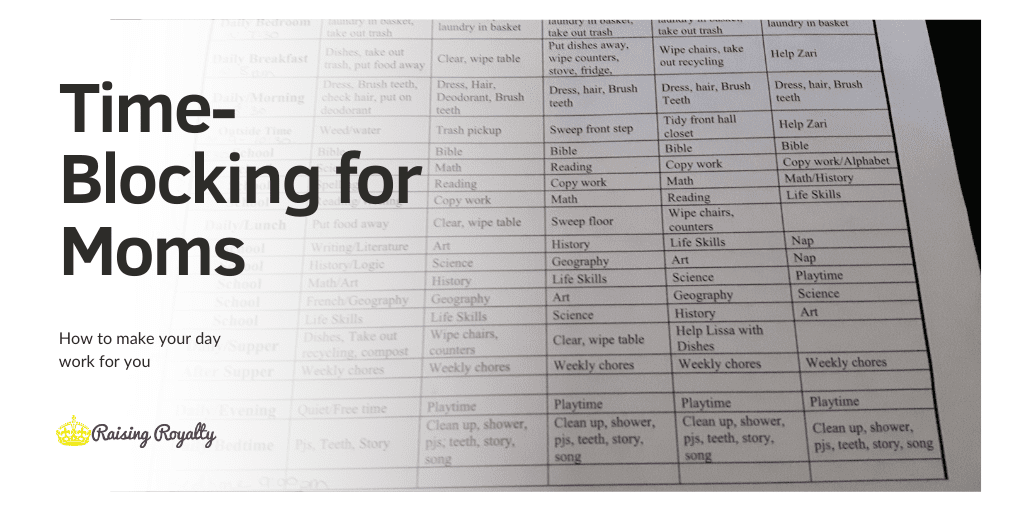
Ever feel like there just aren’t enough hours in the day? Between parenting, cooking, cleaning, working, running errands – and trying to squeeze in a little self-care — it can feel impossible to stay on top of everything. And if you’re homeschooling, that makes things even busier. The to-do list never ends, and the overwhelm just builds. But what if there was a simple way to take control of your day – without adding more stress? That’s where time blocking comes in. It’s your secret weapon to making a busy mom’s life more management.
And because it can be hard to get started, here’s an easy short cut! Grab the free printable Family Command Centre Planner below and follow along.
What is Time Blocking?
At its core, time-blocking is simply breaking your day into blocks of time – and assigning each block a specific task or type of task.
So instead of running a never-ending to-do list in your head (which is, frankly, exhausting), you give every task its own spot in your day. Think of it as giving your day a rhythm – a plan – that helps you move smoothly from one thing to the next.
Why Time Blocking Works for Moms
Time-blocking is a popular productivity trend for business owners and entrepreneurs. And it’s more than that. It’s a tool that works especially well for anyone with a busy lifestyle with lots of competing activities. And since running a household is much like running a business, time-blocking is an even more effective tool for busy moms. Here’s why:
- Predictable Routines help the whole family. Kids thrive on knowing what comes next, and having predictable routines means planning around events is easier.
- You control your time, instead of your to-do list controlling you. And that relieves your mental and emotional stress, leaving you less tired and more capable of handling everything.
- Less decision fatigue – you won’t have to wonder “What should I do now?”. That “mental load” is less heavy with set-aside time blocks for specific tasks and routines, meaning more energy for more important things, like relationships with your children or your own mental health.
- Built-in time for self-care, so it doesn’t get pushed to the bottom. With blocks of time to play with, you can incorporate self-care as part of your daily, weekly or monthly routines.
- Helps avoid multitasking burnout – you focus on one thing at a time, because you know you’ve already planned on how you’ll handle all the other things. You don’t have to worry about forgetting anything, and you can give your tasks more of your attention. That in turn means you can get things done faster, better, and easier!
If you’ve ever ended the day wondering what you actually accomplished, this simple system can make all the difference.
How to Time Block Your Day
Step 1: Brain Dump your Responsibilities
Grab a notebook (or the Free Planner!) and list out everything that fills your day. Include things like:
- Laundry
- Meals
- Homeschool lessons
- Cleaning tasks
- Appointments
- Work hours
- Kids’ activities
- Your own rest time
Everything counts!
Step 2: Identify your “Core” Time Blocks
Now look at your typical day. Break it into big blocks of time. Try these or create your own that make sense for your family’s lifestyle:
- Morning routine
- Homeschool hours
- Lunch & break
- Nap or quiet time
- Work time or project time
- Dinner & evening routine
- Bedtime routine.
Step 3: Create Flexible Routines
Life with kids is never rigid, so don’t over-schedule every second. Instead, think of terms of flexible blocks – routines that guide yoru day, with enough margin for the unexpected. Leave space between blocks for transitions and interruptions. After all, unexpected guests, sudden illness or injury, and last-minute changes of plans happen regularly! Build in “catch-up” or “buffer” time.
For more on creating routines and how they can be used more effectively, check out this post or this post!
Step 4: Use Your Planner!
Now it’s time to put it on paper – and this is where the printable comes in handy.
In your time blocked planner, notebook, or calendar, make your time blocking visual. Use color-coding to mark your time blocks and fill in your time slots for each block. Or use organization stickers, frames, or other methods of notation to mark each set-aside block of time.
Then fill in the routines and habits for each time block.
Examples of a Time Blocked Day for a Homeschool Mom
With Toddlers/Preschoolers:
| Time | Block |
| 6:30-8:00 AM | Morning Routine + Breakfast |
| 8:00-9:30 AM | Homeschool / Circle Time |
| 9:30-11:00 AM | Outdoor play / Errands |
| 11:00 AM-12:00 PM | Lunch prep + Chores |
| 12:00-2:00 PM | Nap / Quiet Time + Work |
| 2:00-4:00 PM | Playtime / Projects / Work |
| 4:00-5:30 PM | Dinner prep + Chores |
| 5:30-8:00 PM | Family time + Bedtime routine |
With School-Age Kids:
| Time | Block |
| 7:00-8:00 AM | Morning routine + breakfast |
| 8:00 AM – 12:00 PM | Homeschool lessons |
| 12:00-1:00 PM | Lunch + Break |
| 1:00-3:00 PM | Independent work / Projects / Work |
| 3:00-4:30 PM | Errands / Activities |
| 4:30-6:00 PM | Dinner prep + Chores |
| 6:00-8:00 PM | Family time + Bedtime routine |
Tips to Make Time Blocking Work for You
Don’t overschedule
As the saying goes, perfect is the enemy of good. And over-scheduling is the enemy of organization. Trying to detail out every single task, activity and to-do on your wish list will only lead to more overwhelm and stress. Time blocking is just another tool in your tool box for keeping on track. Use it as a guide, not a rule.
Reassess often
Productivity and organization tools only work if they keep up with your life’s changes. As noted in the sample time-blocked days above, a time blocked daily routine for a mom with toddlers will look different from a mom with teens. Frequent and regular evaluation of your plans and routines will make sure they keep up with your family’s needs.
Batch similar tasks
In line with the caution against overscheduling, time blocks can be very useful when you group like tasks together. Schedule outdoor chores with your outdoor playtime. Or batch errands with grocery shopping. You can keep smaller to-do lists to make the best use of the time-block, without worrying about finishing everything in that time. There will always be another time block for that type of activity another day.
Communicate to the family!
An organization tool only works if all those who need it know about it and how to use it. So, when you’ve created your time blocked routines, make sure you show your family and teach them how it works. Visual schedules can really help here. And when they know when certain things are going to happen, it will minimize anxiety, frustration, and interruptions.
Block Time for You, too
We all know that if it’s not written down, it didn’t and won’t happen. And this applies to time for yourself too. Whether it’s your own personal hobbies, projects or self-care, make sure you put aside a time block or two in your week for yourself and your own priorities. It’s easy for the family to take over your calendar. Block off time for you, too!
Remember, time-blocking is about creating freedom, not rigidity. It’s a tool to help you spend your time on what matters most.
Take control of your time.
You don’t need more hours in the day – you just need a better way to use the ones you have. Time blocking gives you that power. It helps you move through your day with purpose, peace, and a plan that works for you and your family.
[mailerlite_form form_id=0]

Heya.
This is what I do. We have breakfast at half seven during the week. We start work at eight and continue with it until ten. Then we take a short indoor walk to have a early lunch at half ten each morning. After a hot quick lunch we finish up what we began earlier on that morning. At twelve we either go on a timed walk or do a gardening lesson. Monday afternoon we focus on cookery lessons and first aid. Tuesday’s lessons are music, history and geography. Best wishes.
Wednesday’s planned lessons are dance, art and math. The rest of the week means a thinking lesson, a lesson in sports, a lesson in literature and two short lessons on communication. Another of the weekly lessons is dedicated to science and religious studies is also taught as a lesson. It is fun. Once a year we have a small bonfire with a snack.
Sounds like a great plan!